
Top 15 Chinese Lucky Charms

China, as well as many other Eastern cultures, is deeply rooted in Eastern philosophy, with symbolism playing a very large role in today’s Chinese culture especially in the form of Feng Shui.
An important feature of Feng Shui is the use of Chinese good luck charms and decorations to enhance the harmony of your home with its surroundings, improving positive energy while protecting it from bad luck.
As we will see through the 15 most popular good luck charms in Chinese culture, Chinese good luck symbols take many forms. These good luck symbols can also be used with specific elements to enhance various Feng Shui applications.
1) Dzi Beads

Dzi beads are actually not from China but from Tibet. The Tibetan word Dzi translates to “brilliance” or “shine” and in China, Dzi beads are also known as 天珠, literally translated as “pearl of heaven”.
Usually made of agate carved in unique patterns, Dzi beads are also popular in Chinese Feng Shui practices as good luck charms. Dzi stones are believed to be effective not only in repelling negative energy but also in storing positive energy for the owner’s good fortune.
Dzi stones can come in different shapes and patterns: circles, stripes, wave patterns, etc. They are commonly worn as bracelets, or necklaces.
2) Chinese Lucky Coins

You can easily distinguish the ancient Chinese coins with their square hole in the middle. The round shape of the coin symbolizes the sky, while the square hole represents the earth.
The faces of the coins are usually inscribed with four characters around the four sides of the square hole. This is the yang side of the coin. On the other side, the yin side, there are up to two characters.
There are different ways to use these coins as a good luck charm, usually by tying three coins with a string or ribbon in red, which is a lucky color in China. It is believed that coin necklaces attract financial luck.
3) Laughing Buddha

$29.99


$32.99

One of the most common good luck charms in Chinese Feng Shui is the Laughing Buddha or Buddha of Happiness. This lucky charm symbolizes good fortune, prosperity, fertility, health and wealth.
The Laughing Buddha is based on the story of a Buddhist monk who lived in 10th century China. This monk was rather eccentric and did not fit the typical characteristics of serenity and peace of a Buddhist monk, but he was always happy with a loving heart, so he was loved by many. This monk was then considered the reincarnation of Gautama Buddha, and is now believed to symbolize joy, laughter and happiness.
As a good luck charm, the Laughing Buddha can be placed anywhere in the house except in the bathroom or toilet. However, it is usually placed in the living room or any other place in your home or business where there is money.
4) Chinese Luck Cat

The lucky cat is based on the Japanese Maneki-Neko. It is a very common lucky charm in Feng Shui. The different colors of the cat can symbolize different things, and the fact that the cat raises its paw to the left or right also changes the symbolism.
If the cat raises its left paw, it usually symbolizes a male cat that attracts wealth, fortune and professional success in business. So you can place it in your office or in the area where you usually work to enhance your success.
If, on the other hand, the cat raises its right paw, then it is a female cat that symbolizes prosperity, fertility and family happiness, as well as good health.
5) Great Chinese Ship of Fortune

The ship of fortune is also a very important good luck charm in Chinese Feng Shui. As the name suggests, it is a ship-shaped decoration of various shapes and sizes. They usually carry gems and mini treasures to symbolize wealth and are very popular placed in homes and businesses.
The fortune ship is believed to attract wealth and good fortune. For proper Feng Shui, the boat usually has sails that fully catch the wind to symbolize moving towards a better future.
There are fortune ships built entirely of precious stones and even gold, and others that are constructed of real wood and silk fabric, like a genuine ship.
6) Three-legged Frog
$29.99
The three-legged lucky frog, also called Jin Chanou or Chan Chu is also a very popular and powerful Chinese Feng Shui lucky charm. It is believed to attract and protect your fortune, while protecting you and your family from bad luck.
The three-legged frog symbolizes the flow of money, and Feng Shui dictates that this statue should not be placed facing your main door. It should also not be placed in your kitchen and toilet or bathroom.
The common practice is to place the three-legged frog statue in the main entrance, while another statue next to it has its back to the entrance. This configuration is meant to protect the flow of money coming and going outside the home or business.
7) Amethyst Crystal Tree

In Chinese Feng Shui, crystals are believed to contain positive healing energy, and many people use them as objects of concentration in their meditation practice.
In this case, amethyst crystals are arranged like a tree (with a resin or plastic tree branch) and are believed to have healing properties to calm the mind. They are also considered a good luck charm for wealth and prosperity. The amethyst crystal tree is said to improve memory while maintaining calm and can also help with insomnia. It has the same functions as dream catchers to chase away evil spirits and help you sleep better.
There are also crystal trees made from other materials like agate, citrine, rose quartz, and others.
8. Dragon Turtle
The dragon and the turtle are symbols of protection, wisdom and nobility in Chinese culture. They are two of the four heavenly animals (dragon, tiger, phoenix and turtle).
The dragon turtle, as its name suggests, has the body of a turtle but the head of a dragon, and is believed to symbolize good health, longevity, power, courage and success. A dragon turtle statue is believed to protect its owner from betrayal in business and promote healthy harmony at home and in the workplace.
There are several types of dragon turtle statues used as good luck charms, including three of the most important:
Turtle dragon carrying a pagoda (the Wen Chang Pagoda) on its back. It is a good luck charm for academic success
Turtle dragon with a baby (or a couple of babies) sitting on its shell. It is believed to improve fertility and family harmony
Dragon turtle sitting on coins and gold bars, as you may have guessed, symbolizes financial fortune
9) Pi Xiu
$32.99
Pi Xiu also known as Pi Yao, Tian Lu, Bai Jie or Bi Xie, is a mythical Chinese chimera resembling a winged lion with dragon elements. As good luck charms in Feng Shui, Pi Xiu statues are believed to protect their owner from evil spirits and negative energy, thus preventing bad luck.
Pi Xiu like to eat gold, jewelry, silver and water. Therefore, it is believed that they get rich from all sides for their owner. The Pi Xiu is thought to be a very loyal and obedient mythological animal, making it a favorite as a good luck charm for personal protection. You can find Pi Xiu good luck charms in various forms, such as keychains, bracelets or even statues.
10) Chi Lin

Chi Lin is another mythological chimera from ancient China, a creature with the head of a dragon but the body of a horse. In addition, Chi Lin has the scales of a carp fish. Chi Lin is also often called the dragon horse or sometimes the Chinese unicorn.
The Chi Lin is believed to bring protection to its owner, and also improve the health and wealth of the owner. In addition, it is also known to be a protector against various relationship problems to promote a harmonious household. However, it is mostly associated with the luck of fertility. If you want to learn more about this creature and many others click here.
As a good luck charm, you can place the Chi Lin sculpture near the main entrance of your home or workplace or in your living room. It can also come in various other forms such as embroidery, statue, keychain, amulets, etc. There are also many different materials, finishes and sizes.
11) Chinese Guardian Lion

The Chinese guardian lion or Fu dog, is another Chinese mythological creature. Traditionally, they are placed in front of imperial palaces, government offices in ancient China, and also temples.
Nowadays, Fu dogs are considered a symbol of a family’s wealth and social status, so they are often placed in front of large houses in China and Asia.
Generally, imperial guardian lion statues are displayed in pairs, with the female holding a cub under her left paw, symbolizing maternal protection, and the male holding a globe under his right paw, signifying the protection of his domain (home).
12) Lucky Bamboo Feng Shui

Lucky Bamboo, also known as Lucky Bamboo, is a very important plant in Feng Shui and is believed to bring positive and peaceful energy to the home it is in. Bamboo is a flexible plant that is also hollow inside, and in Chinese philosophy, this symbolizes the flexibility and openness of the individual.
Lucky bamboo can be placed inside the house, or you can also grow real bamboo plants in your garden. There are also various accessories made from bamboo stalks that are believed to produce the same effect.
The number of stalks also plays an important role in the use of Lucky Bamboo. Three stems, for example, are believed to bring three kinds of luck: wealth, longevity and happiness. Seven stems, on the other hand, symbolize health, while eight stems bring good luck to fertility, as the word “eight” in Mandarin is very similar to the word used for “grow”.
13) Symbol of Double Happiness

The Chinese symbol of double happiness is essentially the word (xi) which is written twice side by side so that two of its strokes are joined together.
The meaning of this symbol is quite literal: double dose of happiness for its owner, and it is often used as a decoration for holidays and celebrations (e.g. Chinese New Year, birthday parties, birth of a child, etc.).
The Double Happiness sign was first used as a wedding decoration, a symbol of prayer for the newlyweds to be happy and their marriage to last. However, over the years, it has made its way to other Chinese festivities.
14) Chinese Phoenix

It is one of the four guardians of China (Dragon, Turtle, Phoenix and Tiger), the Phoenix rules over all other birds in China.
Male phoenixes are called Feng, while females are called Huang. However, the distinction between the sexes is not typically made today, and so the phoenix is often called Fenghuang, a female entity associating with the dragon, which is usually a male entity.
As a good luck charm, phoenix carvings represent justice, obedience, and loyalty, and are often used as a good luck charm for those experiencing bad luck, as it is believed to be capable of reversal under bad circumstances.
15) Koi Carp

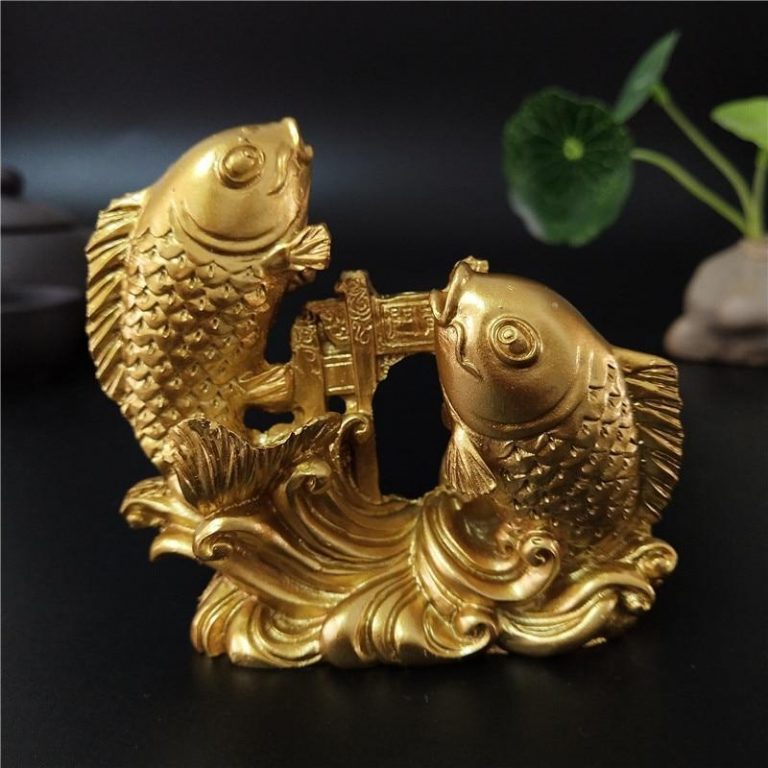
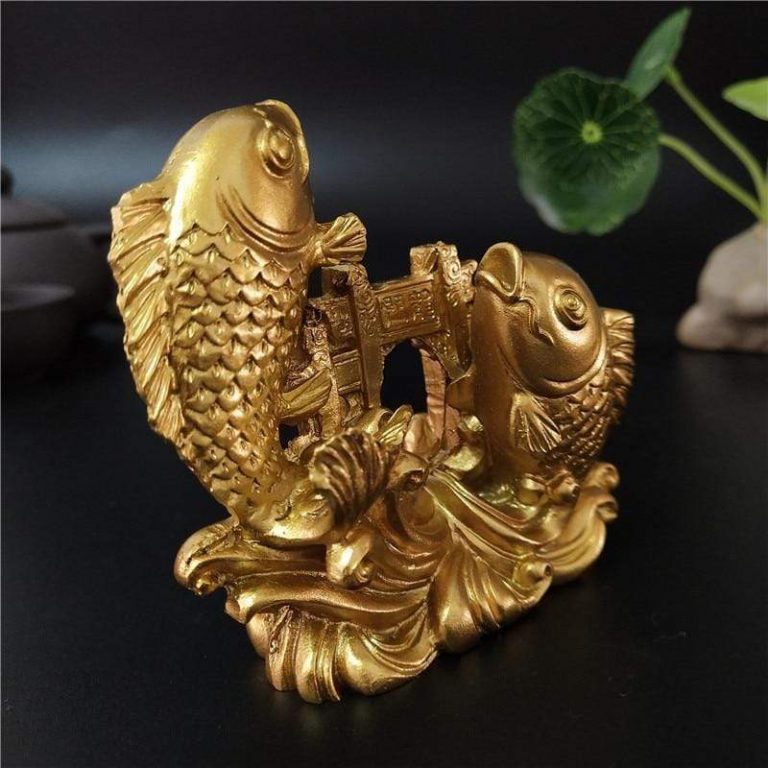
Koi is called 鲤鱼, Li Yu, or literally translated as “carp fish” in China. There are many applications to this lucky charm. For example, a carp statue placed on a study desk is believed to bring academic success.
A common practice is to place 8 pieces of carp around the work desk, as 8 is the Chinese number for wealth and prosperity. A few carp statues placed in the bedroom are also believed to bring happiness in a marriage.